
Deadbolt Locks From Inside but Won’t Lock With the Key Outside in Anaheim, CA? Causes, Safe Fixes & Locksmith Solutions
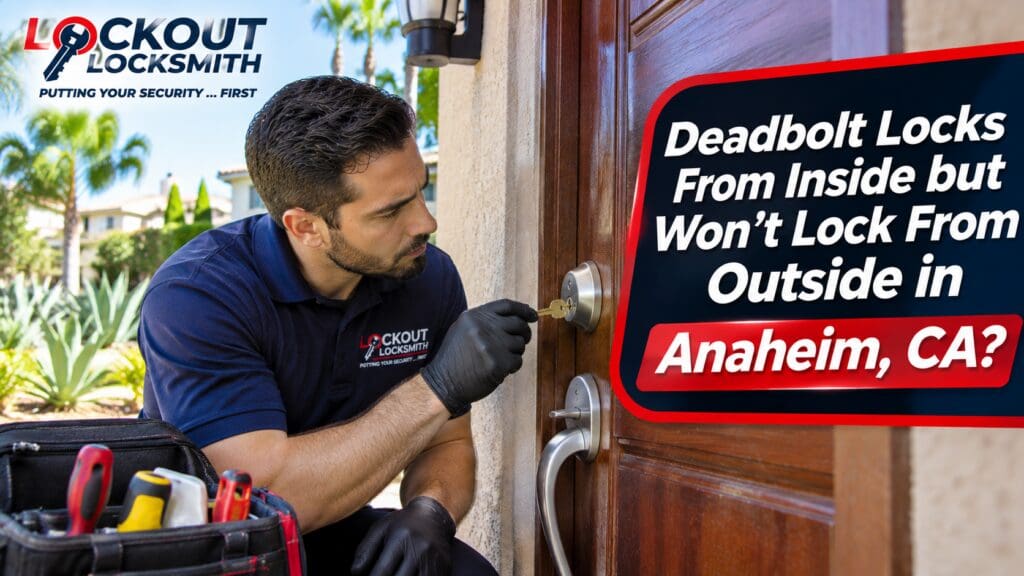
You’re getting ready to leave your Anaheim home for work. You close the front door, insert your key into the deadbolt, and turn it like you always do.
Except this time, the key won’t lock the door.
You try again. The key moves slightly, but the deadbolt doesn’t extend. Maybe the key turns without doing anything, or perhaps it won’t turn at all.
Then you step back inside and test the thumb turn.
It works perfectly.
The deadbolt locks and unlocks from the inside, but the exterior key won’t operate it.
That’s a confusing situation, especially when the lock seemed completely normal the day before.
A deadbolt that locks from inside but not outside can be caused by a worn key, damaged exterior cylinder, disconnected tailpiece, door alignment problem, or another mechanical issue.
The fact that the inside thumb turn works provides a useful clue, but it doesn’t automatically identify the failed component.
For homeowners, renters, and property managers in Anaheim, California, the priority is restoring reliable door security without damaging the hardware or getting locked out.
This guide explains why a deadbolt may operate from the inside but fail from the outside, what you can safely check, and when professional residential locksmith assistance may be necessary.
Why Does My Deadbolt Work From Inside but Not Outside?
Most conventional single-cylinder residential deadbolts have two operating components.
On the outside, a key operates the lock cylinder.
On the inside, a thumb turn operates the same deadbolt mechanism.
Although both components control the locking bolt, they use different operating parts.
This means one side can stop working while the other continues to function.
If the inside thumb turn works normally, the problem may involve the exterior key, cylinder, tailpiece, or the connection between the cylinder and the bolt mechanism.
However, door alignment can also create resistance that affects how the lock operates.
Common causes include:
- Worn or damaged house keys
- Incorrectly duplicated keys
- Exterior cylinder wear
- Internal cylinder component failure
- Damaged or disconnected tailpiece
- Loose deadbolt mounting hardware
- Door or strike plate misalignment
- Incorrect deadbolt installation
- Corrosion or contamination
- Previous improper repairs
- Incompatible replacement parts
- Mechanical wear inside the lock assembly
A professional deadbolt lock repair service in Anaheim can inspect the hardware and determine which component requires attention.
1. Your House Key May Be Worn
A house key can gradually wear from years of daily use.
The cuts along the key blade must interact correctly with the lock cylinder’s internal components.
When a key becomes worn, bent, or damaged, it may no longer operate the cylinder reliably.
The interior thumb turn can continue working because it doesn’t depend on the key.
Signs of a Worn Key
You may notice:
- The key requires extra movement to turn.
- The lock works intermittently.
- One key works better than another.
- The key feels loose inside the cylinder.
- The key has visible wear or damage.
If you have an authorized spare key, compare its normal operation.
Do not force a key that won’t turn.
A professional house key replacement service in Anaheim can assess whether a correctly cut replacement key is appropriate.
2. An Incorrectly Duplicated Key May Not Operate the Cylinder
Not every duplicate key is cut accurately.
A copy made from a worn original may reproduce existing wear.
A poorly cut key may enter the cylinder but fail to operate it correctly.
How to Recognize a Key Duplication Problem
The problem may have started immediately after making a new key.
Your original key may work while the duplicate doesn’t.
Or the duplicate may operate the lock only occasionally.
If this happens, stop forcing the duplicate.
A qualified residential key duplication service in Anaheim can evaluate the key and determine whether a correctly cut replacement is needed.
Whenever possible, key duplication should use an accurate source key or the appropriate key specifications.
3. The Exterior Deadbolt Cylinder May Be Worn
The exterior cylinder contains precision components that allow the correct key to operate the lock.
With repeated use, those components can wear or become damaged.
This may cause the key to stick, turn inconsistently, or stop operating the bolt.
Warning Signs of Cylinder Wear
Possible symptoms include:
- The key won’t turn normally.
- The key catches inside the lock.
- The cylinder feels rough.
- The lock works intermittently.
- The exterior cylinder operates differently from the inside thumb turn.
A professional deadbolt cylinder repair service in Anaheim can inspect compatible hardware.
Depending on the lock design and condition, rekeying, cylinder replacement, or complete deadbolt replacement may be appropriate.
4. A Damaged Tailpiece Can Disconnect the Exterior Cylinder
The tailpiece is a component that connects the exterior lock cylinder to the deadbolt’s operating mechanism.
Its exact design varies by manufacturer.
If the tailpiece becomes damaged, disconnected, or improperly positioned, the exterior key may fail to move the bolt.
Meanwhile, the interior thumb turn may still operate normally.
Signs of a Tailpiece Problem
You may notice:
- The key turns but the bolt doesn’t move.
- The exterior cylinder feels disconnected.
- The thumb turn continues working.
- The problem began after lock installation or repair.
These symptoms can also occur with other internal mechanical failures.
A professional residential deadbolt locksmith in Anaheim can inspect the assembly and identify the appropriate repair.
Avoid dismantling the lock while the door is closed and locked.
5. Loose Mounting Hardware May Affect Deadbolt Operation
Residential deadbolts are secured using mounting hardware.
Over time, hardware may loosen because of repeated operation or improper installation.
A loose assembly can affect the alignment of internal components.
Possible Symptoms
You may notice:
- The exterior cylinder moves slightly.
- The interior thumb turn feels loose.
- The lock operates inconsistently.
- The problem developed gradually.
- The hardware shifts when the key is used.
Do not overtighten screws or force the cylinder into position.
Improper adjustment may create additional binding.
A professional deadbolt lock installation service in Anaheim can inspect the assembly and correct supported installation problems.
6. Door Misalignment Can Make Exterior Locking Difficult
A deadbolt must extend into the strike opening in the door frame.
If the door shifts, the bolt may rub against the strike plate or frame.
This can make locking difficult.
Sometimes the inside thumb turn provides better leverage than the exterior key, making the alignment problem appear to affect only one side.
Signs of Door Alignment Problems
Possible symptoms include:
- The door must be pushed or pulled to lock.
- The deadbolt works when the door is open.
- The bolt rubs against the strike plate.
- The door has uneven gaps.
- The problem changes with temperature or humidity.
A professional front door deadbolt repair service in Anaheim can evaluate whether the issue involves alignment, hardware, or both.
7. The Strike Plate May Be Misaligned
The strike plate is the metal component installed on the door frame where the deadbolt extends.
If the opening doesn’t align with the bolt, the lock may bind.
What Causes Strike Plate Problems?
Potential causes include:
- Door movement
- Loose mounting screws
- Improper installation
- Frame movement
- Hardware replacement
- Long-term wear
A misaligned strike plate can make a properly functioning deadbolt difficult to operate.
However, it may not explain every case where the exterior key fails.
A professional door lock alignment service in Anaheim can determine whether adjustment is necessary.
8. The Deadbolt May Have Been Installed Incorrectly
Installation errors can affect how a deadbolt operates.
For example, an improperly positioned cylinder or incompatible component may prevent normal operation.
When Should You Suspect Installation Problems?
Consider whether the issue began after:
- Installing a new deadbolt
- Replacing the exterior cylinder
- Changing the door hardware
- Rekeying the lock
- Repairing the front door
- Adjusting the strike plate
If the problem appeared immediately after installation, contact the installer or a qualified locksmith.
A professional deadbolt replacement service in Anaheim can assess whether the existing hardware is compatible and correctly installed.
9. Dirt and Contamination Can Affect the Exterior Cylinder
Door locks are exposed to dust, dirt, and environmental contamination.
Over time, debris can interfere with the cylinder’s internal components.
This may make the key difficult to insert or turn.
What Can You Safely Do?
Inspect the visible keyway for obvious debris.
Avoid inserting sharp objects or improvised tools.
Do not spray random household oils into the cylinder.
Use only cleaning and maintenance products approved by the lock manufacturer.
If the problem continues, a qualified residential lock repair service in Anaheim can inspect the cylinder.
10. Corrosion May Affect Lock Performance
Exterior door hardware is exposed to weather and changing environmental conditions.
Although Anaheim has a generally mild climate, locks can still experience moisture exposure and corrosion.
Corrosion may affect the cylinder or other metal components.
Warning Signs
Possible symptoms include:
- Rough key movement
- Visible discoloration
- Sticking components
- Increased resistance
- Intermittent operation
Corrosion doesn’t always mean the entire lock must be replaced.
The appropriate solution depends on the hardware’s condition.
A professional home door lock replacement service in Anaheim can determine whether servicing or replacement is justified.
11. A Previous Rekeying Job May Have Created a Cylinder Problem
Rekeying changes the internal keying configuration of a compatible lock cylinder.
When performed correctly, it allows the lock to operate with a different authorized key.
However, a cylinder may develop problems after improper servicing, incompatible components, or incorrect assembly.
What Should You Check?
Consider whether:
- The problem started after rekeying.
- A newly supplied key doesn’t work.
- The lock operates inconsistently.
- The exterior cylinder feels different.
- The interior thumb turn still works.
A professional deadbolt rekeying service in Anaheim can evaluate the cylinder and determine whether corrective work is necessary.
12. The Deadbolt Mechanism May Be Wearing Out
The bolt mechanism itself can experience wear.
This may cause inconsistent movement or resistance.
In some cases, the thumb turn can still operate the bolt while the exterior cylinder struggles.
Signs of Mechanical Wear
Possible symptoms include:
- Rough bolt movement
- Intermittent locking
- Unusual resistance
- A bolt that doesn’t extend fully
- Hardware that feels loose or worn
A professional deadbolt lock replacement service in Anaheim can evaluate whether the mechanism is serviceable or should be replaced.
Safe Troubleshooting Steps Before Calling a Locksmith
If your deadbolt works from inside but not outside, begin with simple observations.
Step 1: Test an Authorized Spare Key
If you have one, compare its operation.
Step 2: Inspect the Key
Look for bending, damage, or excessive wear.
Step 3: Check for Visible Hardware Movement
Notice whether the cylinder or handle appears loose.
Step 4: Observe Door Alignment
Look for uneven gaps or resistance when closing the door.
Step 5: Test the Deadbolt With the Door Open
Only when you can safely keep the door open and retain access, operate the lock normally to see whether the bolt moves freely.
Do not close the door with the bolt extended.
Step 6: Avoid Forcing the Key
Excessive pressure can break the key or damage the cylinder.
Step 7: Review Recent Repairs
Consider whether the problem began after installation, rekeying, or door adjustment.
Step 8: Contact a Professional Locksmith
A mobile residential locksmith in Anaheim can evaluate supported deadbolt and cylinder problems.
How to Tell Whether the Problem Is the Key, Cylinder, or Door
| Symptom | Possible Cause |
|---|---|
| Spare key works normally | Worn or damaged primary key |
| New duplicate doesn’t work | Incorrect key duplication |
| Key won’t turn | Cylinder or key problem |
| Key turns but bolt doesn’t move | Tailpiece or internal mechanism |
| Lock works with door open | Door or strike alignment |
| Cylinder moves in the door | Loose mounting hardware |
| Problem started after rekeying | Cylinder servicing issue |
| Thumb turn feels stiff too | Bolt or alignment problem |
| Key movement feels rough | Cylinder wear or contamination |
These observations can help narrow down the cause, but they don’t replace professional diagnosis.
Can a Locksmith Repair a Deadbolt Without Replacing the Entire Lock?
In many cases, yes.
If the problem involves a worn key, incorrect keying, loose hardware, or a serviceable cylinder, repair may be possible.
However, some deadbolts have components that aren’t economical or practical to repair individually.
A damaged tailpiece or internal mechanism may require compatible replacement parts.
A professional locksmith for deadbolt repair in Anaheim can inspect the hardware and explain the available options.
Repair, Rekey, or Replace: Which Option Is Best?
Repair
Repair may be appropriate when the existing lock is compatible, serviceable, and in otherwise good condition.
Rekey
Rekeying changes which key operates a compatible cylinder.
It can be useful when keys have been lost or access permissions need to change.
However, rekeying doesn’t automatically fix a broken tailpiece, damaged bolt mechanism, or door alignment problem.
Replace
Replacement may be appropriate when the lock is damaged, severely worn, incompatible, or no longer meets the property’s security needs.
A professional residential lock replacement service in Anaheim can help identify suitable hardware.
How Much Does Deadbolt Repair Cost in Anaheim?
The cost depends on the specific problem.
A replacement key may involve different work than repairing a cylinder or installing a new deadbolt.
Pricing may depend on:
- Lock manufacturer
- Deadbolt type
- Cylinder condition
- Replacement parts
- Rekeying requirements
- Labor
- Door alignment work
- Mobile service fees
- Emergency assistance needs
When requesting emergency locksmith service in Anaheim, ask about the service call fee, diagnostic charges, labor, parts, and any after-hours costs.
An accurate estimate may require inspection.
How to Prevent Deadbolt Problems
Regular attention to door hardware can help prevent avoidable lock failures.
Replace Worn Keys
Don’t continue using visibly damaged keys.
Avoid Forcing the Cylinder
If the key becomes difficult to turn, arrange an inspection.
Maintain Proper Door Alignment
Address sticking doors and unusual gaps early.
Use Compatible Hardware
Confirm lock dimensions and door requirements before replacement.
Schedule Professional Rekeying
Use qualified locksmith services when changing authorized keys.
Inspect Loose Hardware
Have shifting or unstable components evaluated.
Follow Manufacturer Maintenance Instructions
Use only approved products and procedures.
Residential Locksmith Services in Anaheim and Orange County
A deadbolt that works from inside but not outside can make everyday access inconvenient and may compromise the reliability of your front door security.
The cause may be a worn key, damaged cylinder, disconnected tailpiece, or door alignment issue.
Identifying the actual problem helps avoid unnecessary replacement costs.
Lockout Locksmith provides residential locksmith services in Anaheim and nearby Orange County communities.
Explore related services and guides:
- Rekey or Replace Locks in Anaheim
- Smart Lock Installation in Anaheim
- House Lockout Services in Anaheim
- Anaheim Locksmith Services
- Fullerton Locksmith Services
- Orange Locksmith Services
- Garden Grove Locksmith Services
Frequently Asked Questions
1. Why does my deadbolt lock from inside but not outside?
Possible causes include a worn key, damaged exterior cylinder, tailpiece problem, loose hardware, or door alignment issue.
2. Can a locksmith fix a deadbolt that won’t turn with the key?
Yes, depending on the cause and lock design. A locksmith may repair or replace supported cylinders, keys, or lock components.
3. Why does my key turn but the deadbolt doesn’t move?
This may indicate a damaged tailpiece, disconnected internal component, or another mechanical failure.
4. Can a worn house key cause deadbolt problems?
Yes. A worn or damaged key may no longer operate the cylinder reliably.
5. Will rekeying fix a deadbolt that doesn’t work from outside?
Only if the problem involves the cylinder’s keying configuration. Rekeying won’t repair unrelated mechanical damage or alignment issues.
6. How much does deadbolt repair cost in Anaheim?
Pricing depends on the lock, parts, labor, rekeying needs, and service requirements.
7. Should I replace my deadbolt if the exterior key stops working?
Not necessarily. A professional inspection can determine whether repair, rekeying, cylinder replacement, or complete lock replacement is appropriate.
8. Does Lockout Locksmith provide residential locksmith services in Anaheim?
Yes. Lockout Locksmith provides residential locksmith services in Anaheim. Call +1 (747) 758-4842 to confirm availability and service details.
Need Help With a Deadbolt That Won’t Lock From Outside in Anaheim, CA?
A deadbolt that works from inside but fails from outside may have a worn key, damaged cylinder, tailpiece problem, or mechanical alignment issue.
Avoid forcing the key or dismantling the lock while the door is secured.
A qualified locksmith can inspect the hardware and recommend an appropriate solution.
Lockout Locksmith
1096 N Anaheim Blvd, Anaheim, CA 92801
Phone: +1 (747) 758-4842
Hours: Open 24 Hours
Website: https://lockoutlocksmithservices.com/
Google Maps: https://www.google.com/maps/place/?cid=3484008992119144057
Call +1 (747) 758-4842 for residential locksmith assistance in Anaheim, California.