
Commercial Door Closer Repair in Anaheim, CA: Fix Slamming Doors, Leaks & Closing Problems
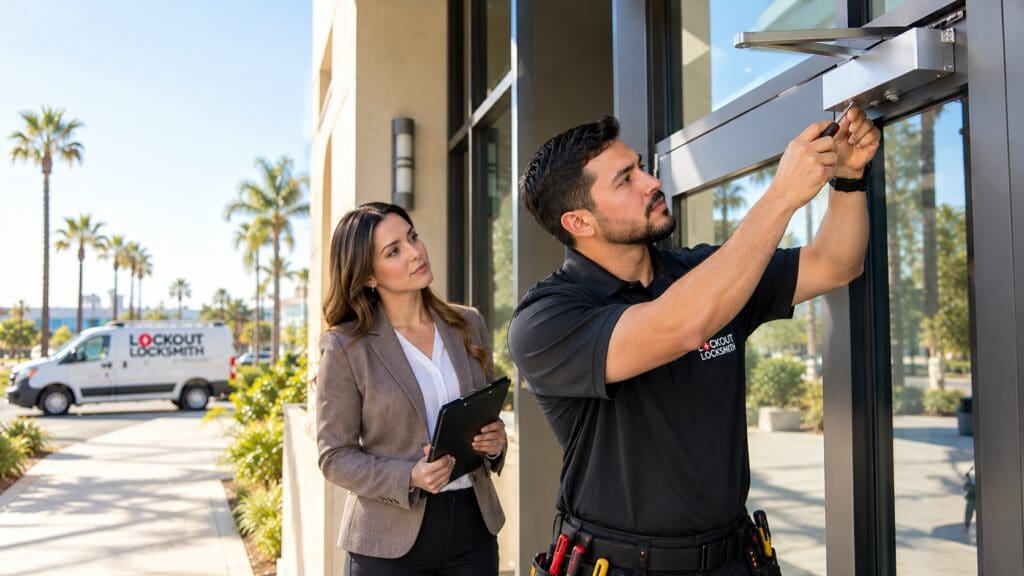
A commercial door that slams shut, refuses to close completely, or moves too slowly can create problems for businesses, employees, customers, and property managers. Besides being inconvenient, a malfunctioning door closer may affect accessibility, daily operations, and the reliable operation of an entrance door.
For businesses looking for commercial door closer repair in Anaheim, CA, understanding the warning signs can help determine when an adjustment, repair, or replacement may be necessary. Office buildings, retail storefronts, restaurants, apartment common areas, and other commercial properties all rely on doors that operate smoothly and close consistently.
Lockout Locksmith serves Anaheim and Orange County, California. If your business is experiencing a door hardware problem, contact the company to confirm whether commercial door closer inspection, repair, or replacement is available for your specific door.
Why Commercial Door Closers Matter
A door closer is a mechanical or hydraulic device that controls a door’s closing movement. It is commonly installed at the top of an office door, storefront entrance, or other commercial doorway. Depending on the model, the device may use a hydraulic mechanism, spring tension, or another closing system to help the door return to its closed position.
A properly functioning closer helps prevent doors from slamming, reduces unnecessary movement, and supports consistent door operation throughout the day.
Commercial door closers are especially important in high-traffic locations. A retail entrance may open hundreds of times during business hours, while an office entrance may be used by employees, visitors, delivery personnel, and contractors.
Over time, frequent use, worn components, loose fasteners, improper adjustment, or physical damage can affect performance. Recognizing these problems early can help a property manager arrange the right commercial door hardware service before the issue becomes more disruptive.
Common Signs You Need Commercial Door Closer Repair in Anaheim, CA
A faulty closer does not always stop working completely. Often, the first signs are small changes in how the door moves.
1. The Commercial Door Slams Shut
A door that closes forcefully may have an adjustment problem, damaged components, or a closer that is no longer operating correctly. Slamming can startle customers and employees, disturb neighboring businesses, and increase wear on the door, frame, hinges, and latch.
Do not assume that tightening a screw will solve the problem. Different closer models have different adjustment procedures, and incorrect adjustments can make the door less safe.
A qualified technician should inspect the closer, hinges, frame alignment, and latch operation to identify the underlying cause.
2. The Door Closes Too Slowly
A door that takes too long to close can interrupt normal traffic and may not latch consistently. The problem could involve the closer’s adjustment, the condition of its internal mechanism, or resistance elsewhere in the door assembly.
Before replacing the closer, the technician should check whether the door swings freely and whether the hinges, seals, latch, and frame are creating excessive resistance.
3. The Door Will Not Close Completely
If a commercial door stops before reaching the frame, several factors may be involved. The closer could be worn or improperly adjusted, but the door may also be dragging, misaligned, or obstructed by damaged hardware.
A closer cannot reliably overcome every alignment problem. Replacing the device without correcting the actual cause may leave the business with the same issue.
4. Hydraulic Fluid Is Leaking
Some hydraulic door closers use fluid to regulate closing speed. Visible oil around the closer body or arm may indicate an internal seal failure or other damage.
A leaking closer should be inspected rather than repeatedly adjusted. When the hydraulic mechanism has lost fluid or its internal components are damaged, replacement may be more appropriate than repair.
5. The Door Opens or Closes Unevenly
Unusual resistance, inconsistent movement, or a door that behaves differently from one cycle to the next can indicate a problem with the closer or the door itself.
Loose mounting hardware, a bent arm, worn hinges, frame movement, and closer damage are all possibilities. A proper inspection should consider the entire door assembly.
6. The Closer Makes Unusual Noises
Clicking, grinding, or other unusual sounds can signal loose parts, damaged hardware, or an arm that is not moving correctly. Noise alone does not establish which component has failed, so an inspection is the best way to identify the cause.
What Causes Commercial Door Closers to Fail?
Commercial doors are exposed to repeated use and changing environmental conditions. The following issues can contribute to closer problems.
Frequent daily use: Repeated opening and closing gradually wears moving parts and mounting points.
Loose screws or mounting brackets: Fasteners can loosen over time, allowing the closer or arm to move out of its intended position.
Damaged closer arms: A forceful impact or improper handling may bend the arm or damage its connections.
Door and frame misalignment: Settling, hinge wear, or frame damage can make the door difficult to close, even when the closer is functioning.
Hydraulic component failure: Internal seals or other components may deteriorate, causing fluid leakage or inconsistent control.
Incorrect installation: A closer installed in the wrong position or with unsuitable hardware may not control the door properly.
Environmental exposure: Temperature changes, moisture, and exposure to outdoor conditions may affect certain door hardware and its performance.
Identifying the cause matters because replacing one component will not necessarily correct a separate problem with the hinges, frame, or latch.
Commercial Door Closer Repair vs. Replacement
Business owners often want to know whether a door closer can be repaired or whether a new unit is needed. The right decision depends on the closer’s design, condition, and the nature of the fault.
When Repair or Adjustment May Be Appropriate
An inspection may reveal that the problem is relatively minor. Depending on the model and condition, the solution might involve:
- Correcting a suitable closing-speed or latching adjustment.
- Securing loose mounting hardware.
- Addressing an issue with the closer arm.
- Correcting related door alignment or hinge problems.
- Replacing compatible, serviceable components where the manufacturer permits it.
Adjustments should be performed according to the closer manufacturer’s instructions. Hydraulic adjustment valves are not interchangeable across all models, and excessive adjustment can damage the unit or create unsafe door movement.
When Replacement May Be the Better Option
Replacement may be appropriate when the closer has a significant hydraulic leak, a damaged body, a bent or broken mechanism, unavailable replacement parts, or repeated failures despite proper servicing.
A replacement closer should be selected for the door’s size, weight, use, mounting arrangement, and operating requirements. The most inexpensive unit is not automatically the right choice for a busy commercial entrance.
For businesses considering commercial door closer replacement in Anaheim, a professional assessment can help identify a suitable option and determine whether related hardware also needs attention.
Office Door Closer Repair in Anaheim
Office buildings often have multiple types of doors, including reception entrances, interior office doors, conference room doors, and doors leading to shared corridors.
A malfunctioning office door closer may create noise, inconvenience employees, or prevent the door from latching properly. In shared buildings, the problem may affect tenants and visitors as well as the property management team.
When arranging office door closer repair in Anaheim, provide details about the affected doorway, the type of closer, and the symptoms. For example, explain whether the door slams, remains partly open, leaks fluid, or has become difficult to open.
If the door is part of a required fire or smoke separation, inform the technician before work begins. The closer and related hardware must remain compatible with the door assembly’s applicable requirements.
Storefront Door Closer Repair for Retail Businesses
A storefront entrance needs to operate reliably during busy trading hours. A door that slams, drags, or fails to close can inconvenience customers and interfere with normal business operations.
Storefront door closer repair should consider more than the closer alone. The technician may need to examine the door’s hinges or pivots, frame alignment, arm connections, latch, and mounting points.
Glass storefront doors require particular care because their hardware and mounting arrangements can differ from those of standard commercial doors. The correct solution depends on the door’s construction and the manufacturer’s specifications.
For retail property managers searching for storefront door closer repair in Anaheim, describing the door type and the exact symptoms can help establish what inspection is needed.
Why Door Closer Problems Should Not Be Ignored
A door that slams or fails to close can create avoidable operational and safety concerns.
A forcefully closing door may startle someone or increase the risk of a hand or finger injury. A door that does not close fully may also affect access control or leave a business entrance unsecured, depending on the door and locking hardware.
Where a door forms part of a fire-rated or smoke-control assembly, its closing and latching functions may be especially important. Any repair or replacement should preserve the assembly’s applicable fire-safety requirements.
Avoid disabling a closer, wedging open a required self-closing door, or making unapproved changes to fire-door hardware as a temporary workaround. If a required door is not closing or latching, arrange prompt assessment by an appropriately qualified professional and follow the building’s safety procedures.
What Happens During a Professional Door Closer Inspection?
The exact process varies by door and closer model, but a thorough inspection generally begins by identifying the symptoms and checking the entire door assembly.
Step 1: Review the Problem
The technician asks when the issue began, whether it happens on every closing cycle, and whether there has been recent damage, renovation, or hardware replacement.
Step 2: Examine the Door and Frame
The door should be checked for dragging, uneven gaps, loose hinges, frame damage, and other sources of resistance.
Step 3: Inspect the Closer and Arm
The inspection may include mounting screws, brackets, the closer body, the arm, visible leakage, and signs of physical damage.
Step 4: Determine the Appropriate Work
Based on the findings, the professional can explain whether adjustment, repair of compatible components, correction of related hardware, or complete replacement is the likely solution.
Step 5: Test Door Operation
After work is completed, the door should be tested through repeated opening and closing cycles. The test should verify that the door moves appropriately and reaches its intended closed and latched position without unsafe slamming.
Where the door is part of a fire-rated assembly, applicable inspection and testing requirements should also be followed.
How Much Does Commercial Door Closer Repair Cost in Anaheim?
The cost of commercial door closer repair in Anaheim, CA, depends on the problem and the door hardware involved. An accurate estimate usually requires information about the closer, door type, access conditions, and necessary parts.
Common cost factors include:
- Type of closer: Different surface-mounted, concealed, and specialized closers have different parts and replacement requirements.
- Repair or replacement: A suitable adjustment may cost less than installing a complete replacement unit.
- Door condition: Damaged hinges, a misaligned frame, or a faulty latch may require additional work.
- Hardware compatibility: Specialized or fire-rated door assemblies may require specific compatible components.
- Access and installation complexity: Concealed hardware or difficult mounting arrangements may take longer to service.
- Service timing: After-hours or urgent appointments may have different pricing, depending on the provider.
When requesting an estimate, ask whether the quoted amount includes labor, parts, removal of the existing closer, installation, and final testing. Also ask whether any additional work will require separate approval.
Avoid relying on a generic online price as a guaranteed quote. The actual cost should reflect the condition of the door and the work required.
Choosing a Commercial Locksmith for Door Hardware Service
Not every commercial door problem has the same cause, and not every locksmith provides the same range of door hardware services. Before scheduling an appointment, confirm that the provider handles the specific closer and commercial door type installed at your property.
Consider asking these questions:
- Does the provider service this type and model of commercial door closer?
- Can they inspect the hinges, frame, arm, and latch as well as the closer?
- Will they explain whether repair or replacement is recommended?
- Are replacement parts compatible with the existing door assembly?
- Will the work preserve applicable fire-door and accessibility requirements?
- Can they provide an estimate before proceeding with additional work?
For Anaheim businesses, confirming service availability in advance helps avoid scheduling a visit for a repair the provider does not perform.
Commercial Door Closer Repair in Anaheim and Orange County
Commercial door hardware issues can affect offices, retail stores, rental properties, and other business premises. The right approach is to identify the source of the problem instead of assuming every door that slams or fails to close needs a new closer.
Lockout Locksmith serves Anaheim and Orange County, California. Contact the business to confirm whether commercial door closer inspection, repair, or replacement is available for your location and hardware type.
If you manage a commercial property, describe the door’s symptoms, whether it is an exterior or interior door, and whether it belongs to a fire-rated assembly. These details can help determine the appropriate next step.
Frequently Asked Questions
1. What are the signs that a commercial door closer needs repair?
Common signs include slamming, unusually slow closing, failure to latch, inconsistent movement, visible hydraulic fluid leakage, loose mounting hardware, and unusual noises. An inspection can help distinguish a closer problem from a door alignment or hinge issue.
2. Can a leaking hydraulic door closer be repaired?
A leak may indicate damaged internal seals or other internal failure. Whether repair is possible depends on the model and the availability of manufacturer-approved parts. In many cases, replacing a significantly damaged hydraulic closer is the more practical option.
3. Why does my commercial door slam shut?
Possible causes include incorrect adjustment, a damaged closer, a loose arm, or problems with the door assembly. A professional should identify the cause before changing the closer settings or replacing hardware.
4. Why will my commercial door not close all the way?
The closer may be damaged or incorrectly adjusted, but the door could also be dragging, misaligned, obstructed, or affected by a faulty latch. Checking the complete assembly helps prevent unnecessary replacement.
5. Should I repair or replace a commercial door closer?
Repair or adjustment may be suitable when the unit is otherwise in good condition and the problem is serviceable. Replacement may be preferable for a leaking, broken, severely worn, or repeatedly failing closer. The decision depends on the model and inspection findings.
6. How long does commercial door closer repair take?
The time depends on the fault, door construction, parts availability, and whether related hardware needs attention. A simple adjustment may take less time than a full replacement or correction of frame and hinge problems. Ask the provider for an estimate after describing the issue.
7. Can a door closer problem affect business security?
Yes. If a door does not close or latch properly, it may affect the intended operation of the entrance and its locking hardware. The security impact depends on the door and lock configuration, so the complete assembly should be inspected.
8. Do fire-rated commercial doors need special attention?
Yes. Fire-rated doors and their hardware may be subject to specific requirements. Repairs and replacements should use compatible components and preserve the door assembly’s required closing and latching functions. Do not disable a required self-closing mechanism.
9. Can I adjust a commercial door closer myself?
Some models permit limited adjustment, but the correct procedure varies. Incorrect adjustments can cause slamming, unreliable latching, damage, or unsafe operation. For commercial entrances and fire-rated doors, follow the manufacturer’s instructions and use a qualified professional when appropriate.
10. How do I request commercial door closer service in Anaheim, CA?
Describe the property location, the type of door, the closer’s visible condition, and the symptoms. Contact Lockout Locksmith to confirm whether the company offers the specific commercial door closer service you need and to ask about an inspection or estimate.
Final Thoughts
A commercial door that slams, leaks, closes slowly, or refuses to latch deserves attention. The problem may involve the closer itself, but hinges, frames, arms, and latches can also affect operation.
For businesses searching for commercial door closer repair in Anaheim, CA, an inspection-based approach helps identify the real cause and determine whether adjustment, repair, or replacement is appropriate. Always ensure that work on required fire-rated doors preserves the assembly’s safety requirements.
Contact Lockout Locksmith to confirm service availability for your commercial door hardware needs in Anaheim and Orange County, California.
Business Information
Lockout Locksmith
Address: 1096 N Anaheim Blvd, Anaheim, CA 92801
Phone: +1 747-758-4842
Service Area: Anaheim & Orange County, California
Hours: Open 24 Hours
Serving homeowners throughout Anaheim and Orange County, California.
Website: https://lockoutlocksmithservices.com/
Google Business Profile: https://www.google.com/maps/place/?cid=3484008992119144057