
Sliding Glass Door Lock Won’t Engage in Anaheim, CA? Common Causes, Safe Fixes & Locksmith Solutions
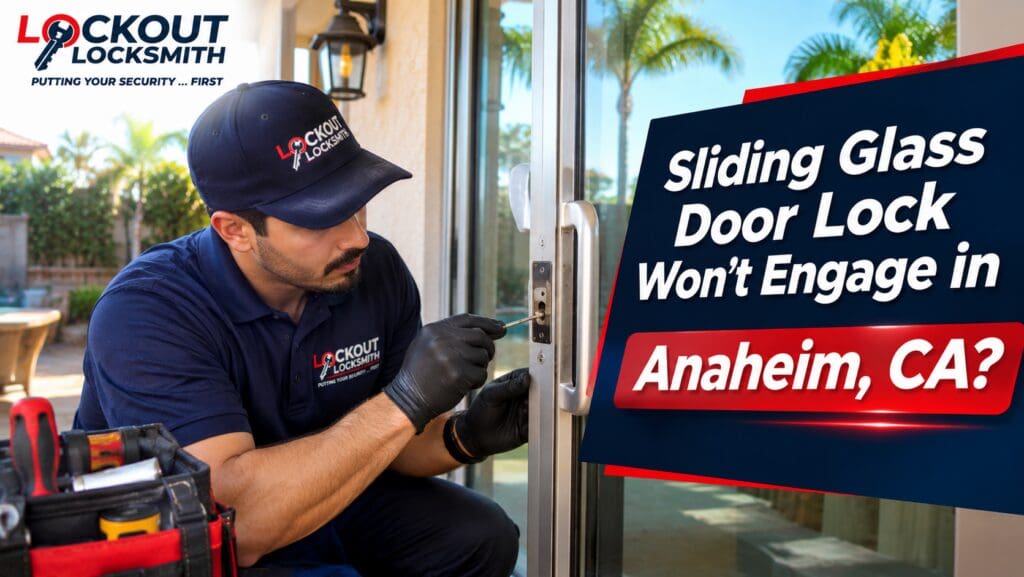
You slide your patio door closed after enjoying a quiet evening in Anaheim. The glass panels meet the frame, everything looks normal, and you reach for the lock.
But the latch won’t catch.
You try again, gently pulling the door toward the frame. The thumb turn moves, but the door doesn’t lock securely.
Now you’re wondering whether the problem is the lock itself, the sliding door track, or something inside the frame.
A sliding glass door lock that won’t engage can be more than an inconvenience. Patio doors often connect living rooms, kitchens, and bedrooms to backyards, balconies, and outdoor spaces. When the locking mechanism doesn’t work properly, homeowners may worry about leaving the property unsecured.
The frustrating part is that a sliding door can appear completely closed while the lock remains disengaged.
Sometimes the cause is relatively simple, such as dirt in the track or a door panel that has shifted slightly out of alignment.
Other times, the problem involves a worn hook latch, damaged keeper, broken mortise lock, or deteriorating hardware.
For homeowners in Anaheim, California, understanding the cause can help prevent unnecessary repairs and reduce the risk of damaging the door.
In this guide, we’ll explain why sliding glass door locks stop engaging, what you can safely check, and when professional locksmith assistance may be appropriate.
Why Won’t My Sliding Glass Door Lock Engage?
Sliding glass doors use different locking mechanisms depending on the manufacturer, age, and design.
Many residential patio doors have a hook-style latch that extends from the door edge and engages with a metal keeper attached to the frame.
Other models use mortise locks, multi-point locking systems, or integrated handle assemblies.
For the door to lock properly, several things must happen.
The sliding panel must reach the correct closed position. The latch must extend or rotate normally. The keeper must align with the locking mechanism. And the hardware must be free from excessive wear or damage.
If any of these conditions aren’t met, the lock may fail to engage.
Common causes include:
- Misaligned sliding door panels
- Worn or damaged rollers
- Debris in the bottom track
- Incorrect keeper alignment
- Broken hook latches
- Worn mortise lock mechanisms
- Loose handle assemblies
- Bent or damaged locking components
- Door frame movement
- Improper replacement hardware
- Multi-point lock problems
- Corrosion or accumulated contamination
A professional sliding glass door locksmith in Anaheim can inspect compatible hardware and help identify the problem.
1. The Sliding Door Panel May Be Misaligned
One of the most common reasons a patio door won’t lock is improper alignment.
A sliding glass door must sit at the correct height and position for the latch to engage with the keeper.
Over time, the panel may shift because of roller wear, repeated use, or adjustment problems.
Even a small alignment difference can prevent the lock from catching.
Signs of Sliding Door Misalignment
You may notice:
- The door is difficult to close completely.
- The latch misses the keeper.
- The door appears slightly tilted.
- The gap between the door and frame looks uneven.
- The lock works only when the panel is held in a particular position.
Avoid forcing the locking handle.
Excessive pressure can damage the latch or handle assembly.
A qualified sliding patio door lock repair service in Anaheim can determine whether the problem involves alignment or the locking hardware.
2. Worn Rollers Can Prevent the Door From Closing Correctly
Sliding glass doors typically move on rollers along a track.
When rollers become worn, damaged, or improperly adjusted, the door may sit unevenly.
This can affect both sliding performance and lock alignment.
For example, the door may still slide, but the hook latch no longer lines up with the keeper.
Warning Signs of Roller Problems
Possible symptoms include:
- Grinding or scraping while sliding
- Increased resistance
- Uneven movement
- A door that feels unusually heavy
- Difficulty bringing the panel fully against the frame
- Locking problems that develop gradually
Roller repair is not always a locksmith service.
Depending on the issue, a sliding door repair specialist may be needed.
If the door is heavy or difficult to control, avoid removing the panel yourself.
Large glass doors can create significant injury risks.
3. Dirt and Debris in the Track May Stop the Door From Closing Fully
Patio doors are exposed to everyday household dirt, dust, and outdoor debris.
In Anaheim, patios and backyard entrances can collect leaves, soil, and other material that eventually reaches the door track.
When debris accumulates, the panel may stop slightly short of its intended closed position.
The door can look closed while the latch remains misaligned.
Safe Track Maintenance
Inspect the visible track.
Remove loose dirt using a soft brush or vacuum.
Avoid sharp tools that could damage the track or weather seals.
Follow the door manufacturer’s cleaning recommendations.
After cleaning, check whether the panel closes normally.
If the door still won’t align with the keeper, professional adjustment may be necessary.
A patio door lock repair technician in Anaheim can evaluate whether the locking mechanism itself is affected.
4. The Keeper Plate May Be Out of Alignment
The keeper is the component on the door frame that receives the latch.
On many sliding doors, a hook-style latch must engage with a precisely positioned keeper opening.
If the keeper shifts or becomes damaged, the latch may no longer catch.
How Keeper Problems Develop
Possible causes include:
- Loose mounting screws
- Previous improper adjustment
- Door panel movement
- Hardware wear
- Frame movement
- Incompatible replacement parts
Signs of Keeper Misalignment
You may notice that the latch moves normally when the door is open but doesn’t engage when the door is closed.
This can indicate an alignment issue, although it doesn’t confirm the keeper is the only problem.
A professional sliding door keeper adjustment service can evaluate the hardware and determine whether adjustment or replacement is appropriate.
5. The Hook Latch May Be Worn or Broken
Many sliding patio doors use a metal hook that rotates or extends into the keeper.
The hook is an important part of the locking mechanism.
If it becomes bent, worn, or damaged, it may fail to engage securely.
Symptoms of a Damaged Hook Latch
Common signs include:
- The latch doesn’t extend fully.
- The hook feels loose.
- The locking thumb turn moves without resistance.
- The hook catches only intermittently.
- The door can still move after the lock appears engaged.
Don’t continue using a visibly damaged latch as though it provides normal security.
A qualified sliding glass door latch replacement service in Anaheim may be able to install compatible replacement hardware.
The correct part depends on the door’s manufacturer, dimensions, and lock design.
6. The Mortise Lock Mechanism May Have Failed
A mortise lock is installed within a prepared opening in the door edge.
Many sliding glass doors use compact mortise lock assemblies connected to the handle or thumb turn.
These mechanisms contain moving parts that can wear over time.
When the internal mechanism fails, the latch may stop responding correctly.
Signs of Mortise Lock Failure
Possible symptoms include:
- The thumb turn rotates without moving the latch.
- The latch sticks.
- The lock works intermittently.
- The handle feels unusually loose.
- The door won’t lock even when properly aligned.
A professional sliding door mortise lock replacement service in Anaheim can identify the lock configuration and determine whether a compatible replacement is available.
Not all mortise locks are interchangeable.
Backset, mounting-hole spacing, faceplate dimensions, and latch design may differ.
7. A Loose Handle Assembly Can Affect Lock Operation
The handle assembly connects the user-operated hardware to the internal locking mechanism.
If components become loose or damaged, the thumb turn may fail to operate the latch correctly.
This can create the impression that the entire lock has failed.
What Should You Look For?
Possible warning signs include:
- A wobbly interior handle
- A thumb turn that feels disconnected
- Loose visible mounting hardware
- Unusual movement around the handle
- A latch that doesn’t respond consistently
Avoid overtightening screws or dismantling the handle without the manufacturer’s instructions.
Some assemblies contain components that must be positioned correctly.
A professional patio door handle and lock replacement service can inspect the assembly and recommend appropriate repairs.
8. The Door Frame May Have Shifted
A sliding glass door relies on proper alignment between the panel and the surrounding frame.
Building movement, installation problems, or long-term wear can affect that alignment.
A shifted frame may cause the latch to miss the keeper even when the lock is functioning correctly.
Warning Signs of Frame Problems
You may notice:
- Uneven gaps around the sliding panel
- Difficulty closing the door
- Rubbing against the frame
- A door that no longer sits square
- Repeated alignment problems after adjustment
A locksmith may be able to evaluate the locking hardware.
However, significant frame movement or structural problems may require a qualified door installer or contractor.
Replacing the lock alone won’t correct a distorted frame.
9. Corrosion Can Affect Sliding Door Lock Hardware
Outdoor-facing door hardware is exposed to changing temperatures, moisture, and environmental contamination.
Over time, corrosion can affect metal components.
This may cause a latch to stick or operate inconsistently.
What Are the Symptoms?
Possible signs include:
- Visible rust or discoloration
- Rough latch movement
- Increased resistance
- Hardware that feels stiff
- A lock that becomes progressively harder to operate
Use only manufacturer-approved cleaning and maintenance products.
Avoid spraying unknown lubricants into the mechanism.
Some products attract debris or damage certain materials.
A residential locksmith in Anaheim, CA can inspect supported locking hardware and determine whether cleaning, servicing, or replacement is appropriate.
10. Replacement Hardware May Be Incompatible
Homeowners sometimes purchase a replacement sliding door lock based on appearance alone.
Unfortunately, two locks that look similar may have different dimensions or operating mechanisms.
An incompatible lock may install into the door but fail to engage properly.
Why Measurements Matter
Sliding door locks can vary in:
- Backset
- Mounting-hole spacing
- Faceplate dimensions
- Latch direction
- Hook geometry
- Handle compatibility
- Keeper configuration
A professional sliding glass door lock installation service in Anaheim can help identify compatible hardware.
Correct fit is important for both reliable operation and security.
11. Multi-Point Locking Systems Can Develop Separate Problems
Some modern patio doors use multi-point locking systems.
Instead of securing the door at one location, these systems engage multiple locking points.
If the panel is misaligned or one component fails, the system may not lock correctly.
Possible Symptoms
You may notice:
- The handle won’t move through its normal range.
- The locking mechanism stops partway.
- One section engages while another doesn’t.
- The door must be positioned precisely to lock.
- The system becomes difficult to operate.
Multi-point locks can be more complicated than basic hook-latch assemblies.
A professional multi-point patio door lock repair service should confirm compatibility with the specific hardware.
Avoid forcing the handle because this can damage additional components.
12. A Sliding Door Can Appear Locked Without Being Secure
One of the most concerning situations occurs when the thumb turn moves into the locked position, but the latch doesn’t actually engage.
The homeowner may believe the patio door is secure.
However, the panel may still move because the latch never caught the keeper.
Why This Matters
A lock should be evaluated based on whether it engages correctly, not simply whether the handle turns.
If you’re uncertain whether the door is secured, avoid relying on the defective lock.
Arrange an appropriate repair as soon as practical.
For immediate security concerns, contact a qualified emergency residential locksmith in Anaheim.
Safe Troubleshooting Steps for Homeowners
If your sliding glass door lock won’t engage, there are several basic checks you can make without dismantling the lock.
Step 1: Check Whether the Door Is Fully Closed
Look for visible gaps between the sliding panel and frame.
Step 2: Inspect the Track
Remove loose debris using safe cleaning methods.
Step 3: Observe the Latch
With the door open and under safe conditions, observe whether the latch moves when operated according to the manufacturer’s instructions.
Keep fingers clear of moving hardware.
Step 4: Look for Visible Hardware Damage
Check for loose handles, bent components, or damaged keeper hardware.
Step 5: Avoid Forcing the Lock
Don’t use excessive pressure on the thumb turn or handle.
Step 6: Check for Door Alignment Problems
Look for uneven gaps, scraping, or difficulty sliding.
Step 7: Review Recent Repairs
Consider whether the problem began after a handle replacement, roller adjustment, or door repair.
Step 8: Request Professional Assistance
A qualified mobile locksmith in Anaheim may be able to inspect compatible patio door locks and recommend repair or replacement.
Can a Locksmith Repair a Sliding Glass Door Lock Without Replacing the Entire Door?
In many cases, yes.
A sliding door that won’t lock doesn’t automatically require a new glass panel or complete door replacement.
If the problem involves a compatible mortise lock, hook latch, keeper, or handle assembly, repairing or replacing the affected hardware may restore normal operation.
However, the correct solution depends on the door’s condition.
If the panel is severely misaligned, the rollers are damaged, or the frame has shifted, additional door repair may be necessary.
A professional sliding glass door lock repair service in Anaheim can help identify which components require attention.
Repair or Replace: Which Option Is Better?
| Problem | Possible Solution |
|---|---|
| Dirty track | Manufacturer-approved cleaning |
| Worn rollers | Roller repair or replacement |
| Keeper misalignment | Professional keeper adjustment |
| Broken hook latch | Compatible latch replacement |
| Failed mortise lock | Mortise lock repair or replacement |
| Loose handle assembly | Handle inspection and repair |
| Corroded lock hardware | Appropriate servicing or replacement |
| Incompatible replacement lock | Correct hardware installation |
| Multi-point lock failure | Specialized mechanism repair |
| Significant frame movement | Door installer or contractor evaluation |
A patio door lock replacement service in Anaheim may be appropriate when the locking mechanism is damaged beyond practical repair.
However, replacement should address the actual cause rather than simply changing parts.
How Much Does Sliding Glass Door Lock Repair Cost in Anaheim?
Repair costs vary based on the door design, hardware, and condition.
A keeper adjustment may require different work than replacing a mortise lock or repairing a multi-point system.
Pricing may depend on:
- Door manufacturer and model
- Lock type
- Replacement parts
- Labor
- Hardware compatibility
- Alignment requirements
- Roller or track problems
- Mobile service needs
- Emergency or after-hours assistance
When requesting sliding patio door locksmith service in Anaheim, explain what happens when you attempt to lock the door.
Ask about service call fees, diagnostic charges, labor, and parts.
An accurate estimate may require an on-site inspection.
How to Prevent Sliding Glass Door Lock Problems
Regular maintenance can help reduce unnecessary wear.
Keep the Track Clean
Remove dirt and debris before it interferes with normal movement.
Avoid Slamming the Door
Repeated impact can place stress on the latch and keeper.
Address Roller Problems Early
A door that becomes difficult to slide may eventually develop alignment problems.
Inspect the Lock Periodically
Watch for unusual resistance or inconsistent latch operation.
Use Compatible Replacement Parts
Confirm dimensions and manufacturer requirements before replacing hardware.
Don’t Force a Sticking Lock
Excessive pressure can damage the mechanism.
Schedule Professional Service When Needed
A qualified technician can evaluate developing problems before the lock stops working completely.
Sliding Glass Door Security for Anaheim Homes
A sliding glass door is often a major access point to a home.
Reliable locking hardware is an important part of residential security.
If the latch doesn’t engage correctly, the door may not provide the protection homeowners expect.
Depending on the door design and security needs, appropriate solutions may include repairing the existing lock, installing compatible replacement hardware, or reviewing additional manufacturer-approved security options.
For related residential locksmith information, explore:
- Smart Lock Installation in Anaheim
- Residential Lock Rekeying Guide
- House Lockout Services in Anaheim
- Anaheim Locksmith Services
- Fullerton Locksmith Services
- Orange Locksmith Services
Lockout Locksmith provides residential locksmith services in Anaheim and surrounding Orange County communities.
Call to confirm service availability and compatibility with your sliding door hardware.
Frequently Asked Questions
1. Why won’t my sliding glass door lock engage?
Common causes include door misalignment, worn rollers, dirty tracks, damaged hook latches, keeper problems, or a failing mortise lock.
2. Can a locksmith fix a sliding glass door lock?
For supported hardware, a locksmith may be able to repair or replace the latch, mortise lock, keeper, or handle assembly. Some alignment and roller problems require a sliding door specialist.
3. Why does my patio door lock only when I lift the handle or door?
This may indicate alignment or roller problems. The latch may not line up correctly with the keeper.
4. Can I replace a sliding glass door lock without replacing the door?
Often, yes. Many sliding doors have replaceable locking components, although compatibility depends on the manufacturer and model.
5. How much does sliding glass door lock repair cost in Anaheim?
Costs depend on the hardware, parts, labor, and whether alignment or additional door repairs are needed.
6. Is a sliding glass door secure if the thumb turn moves but the latch doesn’t catch?
No. A thumb turn that moves without engaging the latch does not establish that the door is securely locked.
7. Can worn rollers cause patio door locking problems?
Yes. Worn or improperly adjusted rollers can affect the door’s position and prevent the latch from aligning with the keeper.
8. Does Lockout Locksmith provide residential locksmith services in Anaheim?
Yes. Lockout Locksmith advertises residential locksmith services in Anaheim. Call +1 (747) 758-4842 to confirm support for your particular sliding glass door hardware.
Need Help With a Sliding Glass Door Lock That Won’t Engage in Anaheim, CA?
A sliding glass door that won’t lock can create daily frustration and leave homeowners uncertain about their property’s security.
The cause may be a misaligned keeper, worn hook latch, damaged mortise lock, loose handle, or door alignment problem.
Instead of forcing the mechanism or purchasing replacement parts without checking compatibility, arrange an appropriate inspection.
Lockout Locksmith provides residential locksmith services in Anaheim and nearby Orange County communities.
Lockout Locksmith
1096 N Anaheim Blvd, Anaheim, CA 92801
Phone: +1 (747) 758-4842
Hours: Open 24 Hours
Website: https://lockoutlocksmithservices.com/
Google Maps: https://www.google.com/maps/place/?cid=3484008992119144057
Call +1 (747) 758-4842 to discuss your sliding glass door lock problem and confirm available residential locksmith assistance in Anaheim, California.