
Office Safe Won’t Open With the Correct Combination in Anaheim, CA? Causes, Safe Troubleshooting & Locksmith Solutions
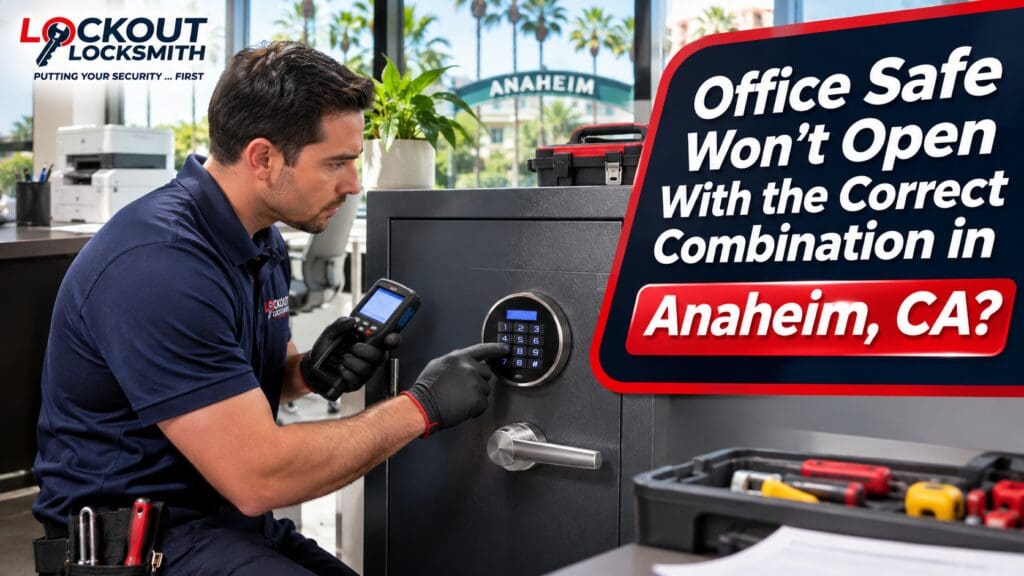
It’s a busy morning at your Anaheim office. You need an important document from the company safe before a meeting. You enter the combination you’ve used countless times, turn the handle, and expect the door to open.
But it doesn’t.
You check the numbers and try again. The combination seems correct, yet the safe remains locked.
Now you’re wondering whether the keypad has failed, the combination has changed, or something inside the locking mechanism has stopped working.
An office safe that won’t open can quickly become a business problem. Important contracts, financial records, backup drives, cash deposits, and other valuable items may be inaccessible when employees need them.
The situation becomes even more frustrating when the safe was working normally the previous day.
If your office safe won’t open with the correct combination, there are several possible explanations. Electronic safes can experience battery problems, keypad failures, and temporary lockout conditions. Mechanical combination safes can develop dial or internal locking problems. Both types may experience handle or boltwork issues.
The most important thing is avoiding unnecessary damage while identifying the cause.
For Anaheim business owners, office managers, and commercial property managers, this guide explains common safe-opening problems, which checks are appropriate, and when professional safe service may be necessary.
Why Won’t My Office Safe Open Even With the Correct Combination?
A safe relies on several components working together.
The combination or access credential must be recognized. The locking mechanism must release. The internal bolts must retract correctly. And the door must be free to move.
If any part of that process fails, the safe may remain closed.
Common causes include:
- Weak electronic lock batteries
- Incorrect combination entry
- Temporary security lockout
- Damaged keypad buttons
- Electronic lock malfunction
- Mechanical dial problems
- Worn internal locking components
- Jammed boltwork
- Handle mechanism failure
- Door pressure or alignment issues
- Previous programming changes
- A malfunctioning external or internal locking component
Not every safe has the same design.
A small office document safe may operate very differently from a commercial burglary-resistant safe or a fire-rated records safe.
Before troubleshooting, identify the manufacturer, model, and lock type if that information is available.
A qualified office safe locksmith in Anaheim or professional safe technician can help determine the appropriate service for supported equipment.
1. Weak Batteries Can Prevent an Electronic Safe From Opening
Many office safes use electronic combination locks powered by batteries.
When battery power becomes low, the keypad may become unreliable.
Some electronic safe locks provide warning signals before the batteries are completely depleted.
Others may appear to function normally but fail to operate the locking mechanism consistently.
Common Signs of Low Battery Power
You might notice:
- Dim keypad lights
- Weak or unusual beeping
- Delayed responses
- Intermittent keypad operation
- A low-battery indicator
- A keypad that stops responding
Battery behavior varies by manufacturer.
Some electronic locks retain their programmed combination when batteries are removed or replaced, but you should confirm this in the manufacturer’s instructions.
What Can You Safely Check?
If the manufacturer provides an approved external battery replacement procedure, follow it carefully.
Use the specified battery type.
Avoid experimenting with incompatible power sources or opening sealed electronic components.
If the safe remains locked after the manufacturer’s recommended battery procedure, contact a professional offering electronic safe lock repair in Anaheim.
2. The Safe May Be in a Temporary Security Lockout
Electronic safes often include security features designed to discourage repeated incorrect combination attempts.
After a certain number of unsuccessful entries, the lock may temporarily stop accepting input.
This can happen even when an authorized employee later enters the correct combination.
Signs of a Temporary Lockout
Depending on the model, the safe may:
- Display an error message
- Produce unusual beeps
- Flash indicator lights
- Stop responding to keypad input
- Require a waiting period before another authorized attempt
The exact behavior depends on the lock manufacturer.
What Should You Do?
Stop entering combinations repeatedly.
Consult the manufacturer’s approved operating instructions.
Don’t try random codes or unauthorized reset procedures.
If the safe is in a normal security delay, the approved procedure may resolve the problem without repairs.
If the keypad remains unresponsive, a qualified commercial safe locksmith in Anaheim can assess the situation.
3. A Worn Keypad Button May Be Preventing Correct Entry
Office safe keypads can experience wear from frequent use.
Some buttons may become less responsive than others.
If one digit doesn’t register, the lock may receive an incomplete or incorrect combination.
This can make a correct code appear invalid.
How to Recognize Keypad Wear
Possible symptoms include:
- One button feels different from the others.
- A digit responds only intermittently.
- The keypad has visible damage.
- Authorized entries fail unpredictably.
- The same number seems difficult to register.
Avoid pressing buttons aggressively.
Excessive force may damage the keypad or internal electronic components.
A professional safe keypad repair service in Anaheim can determine whether the keypad is serviceable or whether a compatible replacement is needed.
Not all electronic locks have separately replaceable keypad components.
4. The Combination May Have Been Changed
In commercial environments, multiple authorized personnel may have access to a safe.
A manager may update the combination after an employee leaves.
A security administrator may change access credentials during a routine review.
Sometimes the change isn’t communicated to everyone who needs access.
This can create the impression that the safe has malfunctioned.
What Should Office Managers Check?
Review the company’s authorized safe access records.
Confirm whether a recent combination change occurred.
Ask the designated safe administrator whether access permissions have been updated.
Don’t circulate combinations through unsecured messages or share them with unauthorized employees.
If the combination has been lost, recovery options depend on the safe model, ownership documentation, and manufacturer procedures.
A professional safe combination change service in Anaheim may be appropriate for supported safes when an authorized change is required.
5. A Mechanical Combination Dial May Be Worn
Not every office safe uses an electronic keypad.
Some commercial safes rely on traditional mechanical combination locks.
These locks use precision components that must operate correctly for the safe to open.
Over time, mechanical wear or damage may affect their performance.
Signs of Mechanical Combination Lock Problems
You may notice:
- Unusual resistance while turning the dial
- A dial that feels loose or inconsistent
- A combination that previously worked but no longer does
- Grinding or scraping sensations
- Difficulty operating the safe handle after dialing
Avoid forcing the dial or handle.
Mechanical safe locks contain specialized components that can be damaged by improper adjustment.
A professional mechanical safe lock repair service in Anaheim can evaluate supported equipment.
6. The Safe Handle May Be Jammed
Sometimes the combination is accepted, but the safe door still won’t open.
This may indicate a problem involving the handle, internal boltwork, or door pressure.
The safe’s locking system may have released, but the bolts may not retract correctly.
What Are the Warning Signs?
Possible symptoms include:
- The keypad indicates successful authorization.
- The handle won’t move normally.
- The handle moves but the door stays closed.
- The safe door appears slightly misaligned.
- The problem began after the door was closed with excessive force.
A jammed handle doesn’t necessarily mean the combination is wrong.
Repeatedly entering the code may not help.
A qualified office safe lock repair technician can evaluate whether the issue is related to the locking mechanism or the door’s mechanical components.
7. Internal Boltwork Problems Can Prevent Safe Access
Many safes use steel bolts or other locking components to secure the door.
These parts must move correctly when the lock is released.
If the boltwork becomes damaged or binds, the door may remain closed.
Potential contributing factors include:
- Mechanical wear
- Damaged internal linkages
- Misalignment
- Excessive pressure against the door
- Previous improper repairs
The specific cause can’t be determined from the symptoms alone.
Safe boltwork is not the same as an ordinary residential door latch.
Improper repair attempts can cause additional damage and make professional servicing more difficult.
A specialized commercial safe repair service in Anaheim may be needed.
8. Overfilled Safes Can Create Door Pressure
Office safes are sometimes packed with documents, folders, cash boxes, or other stored items.
If belongings press against the inside of the door, they may interfere with normal closing or opening.
This is especially relevant when a safe was difficult to close before the problem appeared.
Warning Signs
You might remember:
- The door required extra force to close.
- Documents were positioned near the door.
- The handle felt unusually tight.
- The safe was recently filled beyond its normal capacity.
Don’t pry the door or use excessive force on the handle.
If the safe remains locked, describe these symptoms to a professional technician.
A provider offering safe opening services in Anaheim can assess the available options while considering the safe’s construction.
9. A Faulty Electronic Lock Can Reject Valid Combinations
Electronic safe locks contain circuitry and other components that control authorization and locking.
A malfunction can prevent normal operation even when the keypad appears to work.
Possible causes include:
- Internal electronic component failure
- Damaged connections
- Power-related problems
- Defective keypad circuitry
- Lock control malfunction
These problems may produce symptoms similar to low battery power.
However, replacing batteries won’t fix every electronic fault.
Repair or Replacement?
The correct solution depends on the lock manufacturer, safe construction, parts availability, and condition.
A qualified electronic safe lock replacement service in Anaheim can evaluate whether the existing lock can be repaired or whether an approved replacement is appropriate.
Compatibility is important because safe locks must match the safe’s security requirements.
10. Previous Repairs May Have Affected the Locking Mechanism
Safe problems sometimes begin after maintenance.
For example, a lock may have been replaced, serviced, or adjusted.
If components were installed incorrectly or incompatible parts were used, normal operation may be affected.
What Should You Tell the Technician?
Mention whether:
- The safe was recently serviced.
- A keypad was replaced.
- The combination was changed.
- The handle was repaired.
- The safe was moved.
- The door was previously difficult to close.
These details may help the technician identify the affected system.
A professional commercial safe maintenance service in Anaheim can review the equipment and recommend appropriate corrective work.
11. Moving an Office Safe Can Sometimes Lead to Mechanical Problems
Businesses occasionally relocate safes during office renovations or moves.
A heavy safe may be exposed to vibration, impact, or improper handling.
Depending on the equipment and severity of the incident, damage may affect the door, handle, or locking mechanism.
A problem that begins immediately after moving the safe deserves professional evaluation.
Why Safe Handling Matters
Commercial safes can be extremely heavy.
Improper lifting or movement creates injury risks and may damage the safe or surrounding property.
Use qualified safe-moving professionals for equipment that requires specialized handling.
If the safe no longer operates normally after relocation, arrange an inspection before attempting further movement or repairs.
12. Not Every Locksmith Services Every Type of Safe
Safe servicing is a specialized area of locksmith work.
Some locksmiths primarily handle automotive, residential, and commercial door locks.
Others have additional training, tools, and manufacturer support for particular safe models.
A large commercial safe may require a dedicated safe technician.
What Should You Ask Before Scheduling Service?
Provide the manufacturer and model if known.
Explain whether the safe uses a mechanical dial, electronic keypad, or another locking system.
Ask whether the provider services that specific equipment.
Confirm whether proof of ownership or business authorization is required.
Lockout Locksmith provides commercial locksmith services in Anaheim. Call to confirm whether your particular safe model and problem are supported.
Safe Troubleshooting Checklist for Anaheim Business Owners
Before requesting professional assistance, gather a few useful details.
Step 1: Identify the Safe Type
Determine whether the safe uses a mechanical combination dial or an electronic keypad.
Step 2: Check the Manufacturer’s Instructions
Use only the operating and maintenance procedures approved for your model.
Step 3: Review Authorized Combination Records
Confirm that the combination hasn’t been changed by another authorized administrator.
Step 4: Look for Low-Battery Warnings
For electronic locks, follow the manufacturer’s approved battery guidance.
Step 5: Stop Repeated Failed Attempts
Avoid triggering or extending a security lockout.
Step 6: Observe the Handle
Note whether the handle feels normal, unusually stiff, or loose.
Don’t force it.
Step 7: Document Recent Changes
Record any recent repairs, relocation, or unusual closing behavior.
Step 8: Contact a Qualified Professional
A professional safe locksmith in Anaheim, CA can help determine the appropriate next steps for supported equipment.
Can a Locksmith Open an Office Safe Without Damaging It?
In some situations, a qualified safe technician may be able to restore access using a method that preserves the safe and its locking system.
However, this isn’t possible in every case.
The appropriate approach depends on the safe’s design, security features, condition, and failure type.
Some mechanical problems require more extensive servicing.
A professional should explain the available options and potential risks before work begins.
For security reasons, reputable providers may require proof of ownership or authorization.
If important business records are locked inside, explain the urgency and the type of safe when contacting a technician.
Repair, Replace, or Upgrade: Which Option Makes Sense?
| Problem | Potential Solution |
|---|---|
| Weak electronic lock battery | Manufacturer-approved battery replacement |
| Temporary security lockout | Approved recovery procedure |
| Worn keypad | Keypad inspection or replacement |
| Changed combination | Authorized access review |
| Mechanical dial malfunction | Professional lock service |
| Jammed handle | Mechanical diagnosis |
| Boltwork failure | Specialized safe repair |
| Electronic lock failure | Compatible lock repair or replacement |
| Damage after relocation | Professional safe inspection |
| Obsolete locking hardware | Evaluate an approved upgrade |
A professional commercial safe lock replacement service can help determine whether replacement is justified.
Not every malfunction requires replacing the entire safe.
How Much Does Office Safe Opening Cost in Anaheim?
The cost of safe service varies considerably.
An electronic keypad problem may require different work than a damaged mechanical combination lock or internal boltwork failure.
Pricing may depend on:
- Safe manufacturer and model
- Lock type
- Safe security rating
- Nature of the malfunction
- Replacement parts
- Diagnostic labor
- Accessibility of the safe
- Emergency service requirements
- Whether specialized safe equipment is necessary
When requesting emergency safe locksmith service in Anaheim, ask about the service call charge, diagnostic fees, labor, parts, and any potential additional costs.
A reliable estimate may require an inspection.
Be cautious of unusually low quotes that don’t explain what is included.
How to Prevent Future Office Safe Lockouts
Safe maintenance and access management can help reduce avoidable problems.
Follow Battery Replacement Guidance
For electronic safes, use the battery type and maintenance schedule recommended by the manufacturer.
Keep Access Records Secure
Maintain authorized combination information according to company security policy.
Limit Combination Sharing
Only designated personnel should have access.
Inspect Unusual Lock Behavior Early
A keypad that works intermittently or a handle that becomes difficult to move should be evaluated before complete failure.
Avoid Overfilling the Safe
Leave adequate clearance for the door and locking components.
Use Qualified Safe Movers
Protect heavy equipment during relocation.
Arrange Professional Maintenance When Needed
A qualified technician can assess developing problems in supported safe locks.
Office Safe Security and Commercial Locksmith Services in Anaheim
A reliable safe is one part of a business’s overall security plan.
Commercial properties may also need secure exterior doors, controlled employee access, high-security locks, and appropriate key management.
For related services, explore:
- Commercial Locksmith Services in Anaheim
- High-Security Lock Installation in Anaheim
- Anaheim Locksmith Services
- Fullerton Locksmith Services
- Orange Locksmith Services
- Garden Grove Locksmith Services
Lockout Locksmith provides commercial locksmith services in Anaheim and nearby Orange County communities.
For safe-specific work, call to confirm equipment compatibility and technician availability.
Frequently Asked Questions
1. Why won’t my office safe open with the correct combination?
Possible causes include weak batteries, temporary security lockout, keypad malfunction, mechanical lock wear, jammed boltwork, or handle problems.
2. Can low batteries prevent an electronic safe from opening?
Yes. Depending on the model, low battery power can affect keypad operation or the electronic locking mechanism.
3. Can a locksmith open a commercial safe without damaging it?
Sometimes. The available options depend on the safe’s design, condition, and malfunction. A qualified safe technician can explain the appropriate approach.
4. What should I do if my safe keypad stops responding?
Follow the manufacturer’s approved instructions, check for low-battery warnings, and avoid repeated random entries. Contact a qualified professional if the problem continues.
5. Why does my safe accept the combination but the handle won’t turn?
The issue may involve internal boltwork, the handle mechanism, door pressure, or another mechanical component.
6. How much does office safe opening cost in Anaheim?
Pricing depends on the safe type, problem, labor, parts, and service requirements. Contact a qualified provider for an estimate.
7. Should I replace my safe if the combination lock stops working?
Not necessarily. Some problems can be resolved through appropriate maintenance or lock replacement. The safe’s condition and security requirements should guide the decision.
8. Does Lockout Locksmith provide commercial locksmith services in Anaheim?
Yes. Lockout Locksmith advertises commercial locksmith services in Anaheim. Call +1 (747) 758-4842 to confirm whether your specific safe model and service needs are supported.
Need Help With an Office Safe That Won’t Open in Anaheim, CA?
When an office safe refuses to open, the problem can interrupt daily operations and delay access to important business property.
The cause may be a weak battery, damaged keypad, mechanical lock issue, or internal locking problem.
Avoid forcing the handle, attempting unauthorized resets, or dismantling the safe.
Instead, identify the symptoms and arrange appropriate professional assistance.
Lockout Locksmith provides commercial locksmith services in Anaheim and surrounding Orange County communities. Contact the business to confirm whether safe-related assistance is available for your particular equipment.
Lockout Locksmith
1096 N Anaheim Blvd, Anaheim, CA 92801
Phone: +1 (747) 758-4842
Hours: Open 24 Hours
Website: https://lockoutlocksmithservices.com/
Google Maps: https://www.google.com/maps/place/?cid=3484008992119144057
Call +1 (747) 758-4842 to discuss your office safe problem and confirm available commercial locksmith assistance in Anaheim, California.